What is Retatrutid 60mg?
Retatrutid is a novel peptide-based drug that functions as a triple receptor agonist, simultaneously targeting GLP-1, GIP, and glucagon receptors. It facilitates weight loss through comprehensive regulation of appetite by enhancing satiety, suppressing hunger, and increasing energy expenditure. Additionally, Retatrutid demonstrates significant improvements in multiple cardiometabolic risk indicators including blood pressure, glycated hemoglobin (HbA1c), fasting blood glucose, insulin levels, total cholesterol, LDL cholesterol, and triglycerides. It also exerts positive effects on patients with non-alcoholic fatty liver disease (NAFLD), normalizing hepatic fat content in the majority of participants.
Compared to single or dual agonists, Retatrutid uniquely activates three receptors (GLP-1, GIP, and GCG) simultaneously, enabling multidimensional regulation of blood glucose and body weight. This multi-target mechanism theoretically allows for more comprehensive improvement of metabolic disorders, demonstrating distinct advantages in weight reduction, amelioration of hepatic steatosis, and normalization of blood glucose levels. The synergistic action of multiple receptors renders Retatrutid more effective than existing GLP-1 receptor agonists or dual agonists in metabolic regulation and weight management, offering a novel therapeutic option for individuals with obesity and type 2 diabetes.
Retatrutid 60mg Structure
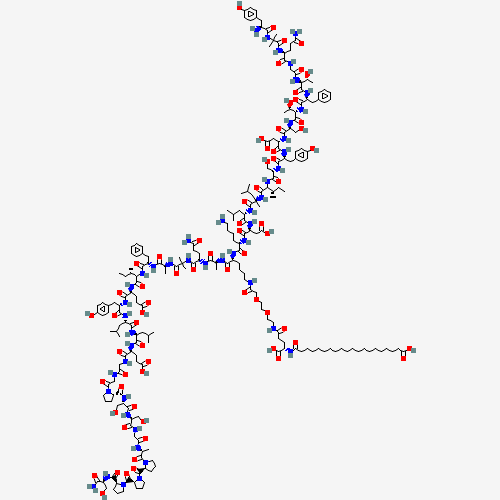 Source: PubChem |
|
Sequence: YA⊃1;QGTFTSDYSI-L⊃2;LDKK⁴AQA⊃1;AFIEYLLEGGPSSGAPPPS⊃3;
Molecular Formula: C221H342N46O68
Molecular Weight: 4731 g/mol
CAS Number: 2381089-83-2
PubChem CID: 171390338
Synonyms:LY3437943 |
Retatrutid 60mg Research
What is the research background of Retatrutid?
Obesity is one of the major public health problems today. Obesity can lead to a variety of health problems, such as type 2 diabetes, cardiovascular diseases, hypertension, dyslipidemia, and non-alcoholic fatty liver disease. With the continuous increase in the incidence of obesity, there is a growing demand for new therapies that can effectively manage body weight and improve health status
[1]. Although lifestyle modifications, such as increasing physical activity and reducing food intake, are the primary methods for weight management, long-term maintenance of weight loss remains a challenge for many affected adults. Retatrutid is a novel triple receptor agonist that acts on the glucagon-like peptide-1 receptor (GLP-1R), glucose-dependent insulinotropic polypeptide receptor (GIPR), and glucagon receptor (GCGR). This multi-receptor mechanism of action gives it unique advantages in weight loss. Compared with weight loss drugs that act on a single receptor, Retatrutid can more comprehensively regulate the body's metabolic processes
[1]. Retatrutid achieves weight loss by regulating multiple hormone receptors. It not only has a significant weight loss effect but also has relatively mild gastrointestinal side effects. In addition, compared with other new weight loss drugs, Retatrutid, as a triple receptor agonist, has a more powerful weight loss effect and a wider range of applicable populations.
What is the mechanism of action of Retatrutid?
The mechanism of action of Retatrutid mainly stems from its agonistic effects on multiple receptors. Firstly, its agonistic effect on the glucagon-like peptide-1 receptor (GLP-1R) increases insulin secretion, inhibits glucagon secretion, reduces blood glucose levels, and at the same time delays gastric emptying, increases satiety, and reduces food intake
[2]. Secondly, its agonistic effect on the glucose-dependent insulinotropic polypeptide receptor (GIPR) can promote insulin secretion, enhance glucose utilization, and have an impact on fat metabolism, inhibiting lipolysis and promoting fat synthesis
[2]. Moreover, although the agonistic effect of Retatrutid on the glucagon receptor (GCGR) usually promotes glycogenolysis and gluconeogenesis in the liver, increasing blood glucose levels, under the action of Retatrutid, this effect of increasing blood glucose is offset by the effects of the other two receptors. At the same time, it promotes lipolysis and reduces fat accumulation
[2]. This multi-target mode of action may be more effective in treating obesity than single receptor agonists.
By simultaneously activating these three receptors, Retatrutid can exert a variety of metabolic regulatory effects and produce therapeutic effects on obesity and related diseases. In terms of regulating blood glucose levels, due to the activation of GLP-1R and GIPR promoting insulin secretion and inhibiting glucagon secretion, and the activation of GCGR being offset by the effects of the other two receptors, Retatrutid can effectively regulate blood glucose levels, which is of great significance for the treatment of type 2 diabetes
[1, 2]. In terms of reducing fat accumulation, the activation of GCGR promotes lipolysis and reduces fat accumulation. At the same time, the activation of GLP-1R increases satiety and reduces food intake, further reducing fat synthesis
[1, 2]. In addition, Retatrutid also has a beneficial effect on non-alcoholic fatty liver disease. It can reduce the fat content in the liver and improve liver function. A randomized, double-blind, placebo-controlled trial showed that the average relative change in liver fat in the Retatrutid treatment group at 24 weeks was significantly lower than that in the placebo group
[3].
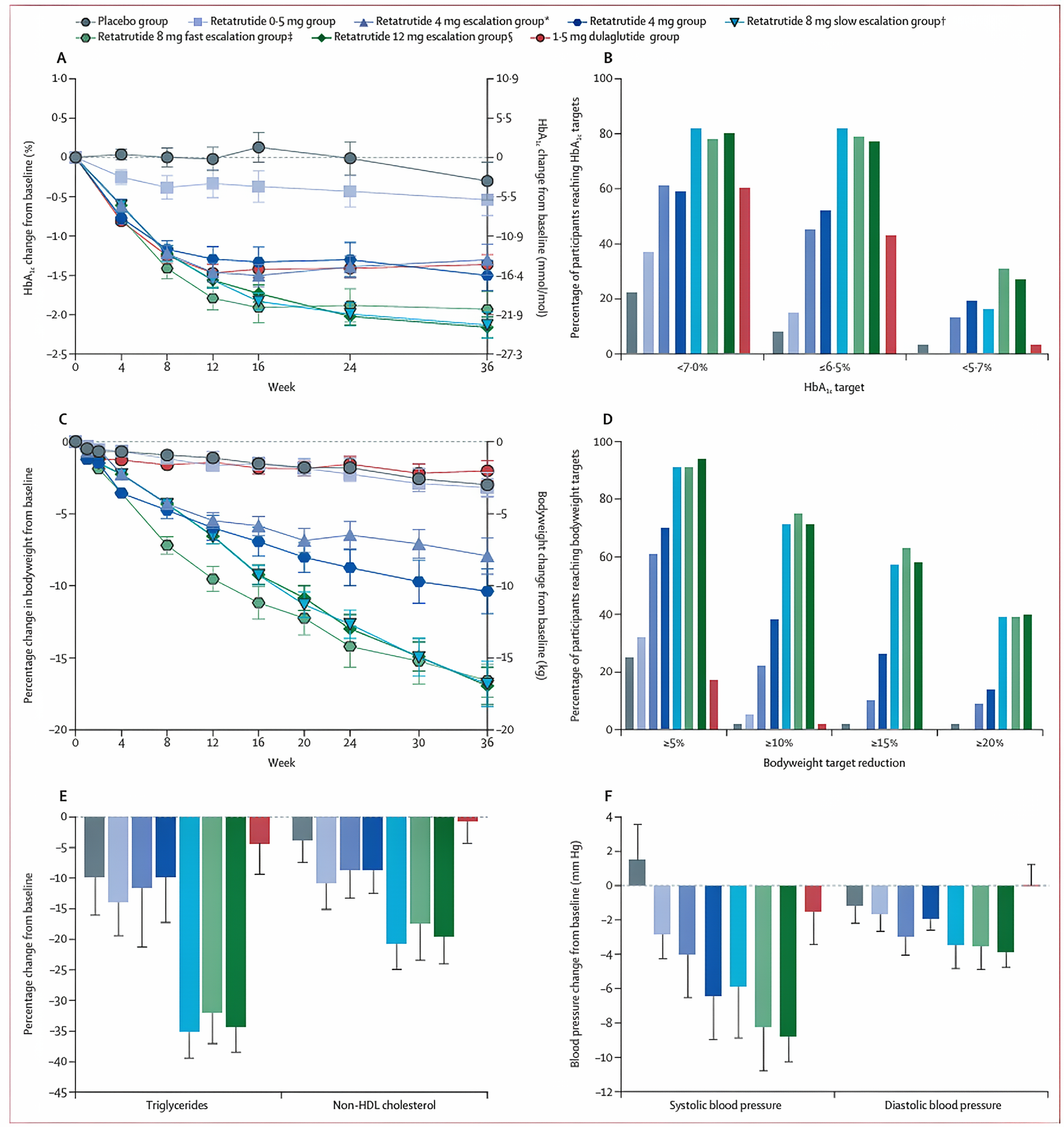 HbA1c, bodyweight, blood pressure, and lipids Data are least-squares means (with error bars showing SEs) from the efficacy analysis set, unless otherwise noted.
Source:PubMed
[4]
How exactly does Retatrutid regulate glucose metabolism after activating the three receptors?
Retatrutid regulates blood glucose through multiple mechanisms, including activating GLP-1 and GIP receptors, stimulating insulin secretion, inhibiting glucagon secretion, delaying gastric emptying, regulating fat metabolism, and reducing ANGPTL3/8 levels. In terms of blood glucose regulation, Retatrutid acts on GLP-1 and GIP receptors, promoting the sensitivity of pancreatic β cells to glucose, synthesizing and releasing insulin, and then promoting the uptake and utilization of glucose by tissues, achieving the effect of reducing blood glucose
[4, 5] .In a study of type 2 diabetes patients, Retatrutid showed a significant effect of reducing glycated hemoglobin (HbA1c), which largely benefits from its role in stimulating insulin secretion (Rosenstock J, 2023). At the same time, activating the GLP-1 receptor can inhibit the secretion of glucagon by pancreatic α cells, preventing blood glucose from being too high. In clinical studies, it has been observed that the glucagon levels of patients using Retatrutid have decreased, which in turn helps to maintain the stability of blood glucose
[4, 5]. Activating GLP-1 and GIP receptors can also delay the rate of gastric emptying, slow down the digestion and absorption of food, and reduce the sharp rise in postprandial blood glucose. Studies have shown that the gastric emptying time of patients treated with Retatrutid is significantly prolonged after eating, thereby reducing the peak value of postprandial blood glucose
[4].
The regulation of fat metabolism by Retatrutid also indirectly affects glucose metabolism. For example, in studies of obese patients, it has been found that Retatrutid can reduce the levels of triglycerides (TG), low-density lipoprotein (LDL), and very-low-density lipoprotein (VLDL) cholesterol
[2, 6] . This improvement in lipid metabolism may be related to the improvement of insulin sensitivity, thereby contributing to blood glucose control. Specifically, after Retatrutid treatment, the plasma 3-hydroxybutyric acid (3-HB) increases, accompanied by an increase in 3-hydroxybutyrylcarnitine (C
4OH), the ratio of acetylcarnitine to free carnitine (C
2/C
0), and medium-chain acylcarnitine, indicating enhanced lipolysis in adipose tissue and an increased dependence on fat oxidation.
Retatrutid can also reduce the total dihydroceramides (DhCers), and this change is associated with improved insulin sensitivity, reduced hepatic steatosis, and systemic inflammation
[6] .At the same time, Retatrutid can also reduce the concentration of the ANGPTL3/8 complex in the serum of type 2 diabetes patients, regulating glucose metabolism
[7]. ANGPTL3/8 is the most effective circulating inhibitor of lipoprotein lipase (LPL), and its serum level is directly related to TG and low-density lipoprotein cholesterol (LDL-C). Retatrutid reduces the level of ANGPTL3/8, which may regulate glucose metabolism by reducing triglyceride-rich lipoproteins
[7] .
In what aspects does Retatrutid show its effects?
Significant weight loss effect:
Retatrutid has shown significant weight loss effects in multiple clinical trials. For example, in a clinical study involving 338 adults
[2], patients treated with different doses of Retatrutid had a significant weight loss at 48 weeks. Among them, patients in the 12mg dose group had a weight loss of 24.2%, and a high proportion of patients achieved weight loss to varying degrees. For example, among patients receiving 4mg, 8mg, and 12mg doses, 92%, 100%, and 100% of patients lost 5% or more of their body weight, respectively. In another study
[8], two randomized controlled trials involving 353 type 2 diabetes patients showed that compared with the placebo, Retatrutid could significantly reduce the body weight of patients by 11.89kg and reduce glycated hemoglobin (HbA1C). In addition, in a trial of non-diabetic obese adult patients, Retatrutid caused a weight loss of 24.2% in patients, and 83% of patients lost 15% or more of their body weight at 48 weeks. These results indicate that Retatrutid has great potential in weight loss.
Treatment of type 2 diabetes:
Retatrutid also shows certain potential in the treatment of type 2 diabetes. In some clinical trials, Retatrutid has shown a reduction in glycated hemoglobin (HbA1c) and dose-dependent weight loss. For example, in one study, in type 2 diabetes patients, Retatrutid showed a significant blood glucose control effect, reducing glycated hemoglobin by 1.64% compared with the placebo
[4, 8]. In addition, in a randomized, double-blind, placebo, and active-controlled parallel-group phase 2 trial, animal models with type 2 diabetes showed a significant reduction in glycated hemoglobin levels and a dose-dependent weight loss after receiving Retatrutid treatment
[4] . This can be attributed to the comprehensive effects of the drug on GLP-1, GCGR, and GIPR, which improve glucose metabolism and energy balance.
Improvement of cardiovascular risk factors:
Retatrutid can not only reduce body weight but also improve cardiovascular risk factors, such as serum lipid profile and glycated hemoglobin levels. This indicates a close pathophysiological connection between obesity and cardiovascular diseases, and Retatrutid may improve the cardiovascular health of obese patients through multiple pathways. For example, reducing non-HDL-C, apoB, and LDLP levels can reduce the risk of atherosclerosis; reducing glycated hemoglobin levels can improve blood glucose control in diabetes patients, thereby reducing the risk of cardiovascular complications
[8-10] .
Treatment of non-alcoholic fatty liver disease (NAFLD):
Retatrutid is a novel triple receptor agonist peptide that targets the glucagon receptor (GCGR), glucose-dependent insulinotropic polypeptide receptor (GIPR), and glucagon-like peptide-1 receptor (GLP-1R). Studies have shown that Retatrutid has potential in the treatment of non-alcoholic fatty liver disease. In one study, a randomized, double-blind, placebo-controlled trial lasting 48 weeks was conducted on participants with metabolic dysfunction-associated fatty liver disease and a liver fat content of ≥10%. The results showed that at 24 weeks, the average changes in liver fat relative to the baseline in participants treated with different doses of Retatrutid (1mg, 4mg, 8mg, and 12mg) were -42.9%, -57.0%, -81.4%, and -82.4%, respectively, while that in the placebo group was +0.3%
[3]. This indicates that Retatrutid may have a significant therapeutic effect on non-alcoholic fatty liver disease.
In conclusion, as a novel triple receptor agonist, Retatrutid shows great potential in the treatment of obesity and related diseases. It can activate the glucagon receptor, glucose-dependent insulinotropic polypeptide receptor, and glucagon-like peptide-1 receptor, comprehensively regulating the body's metabolism from multiple dimensions, improving blood glucose control, reducing body weight, and regulating lipid metabolism. The emergence of Retatrutid brings new treatment options for patients with obesity, type 2 diabetes, and other diseases. It is expected to break through the limitations of traditional single receptor agonist drugs, provide a more powerful weapon for solving the increasingly serious problems of obesity and metabolic diseases, promote the further development of related medical fields, improve the quality of life of patients, and reduce the social medical burden.
About The Author
The above-mentioned materials are all researched, edited and compiled by Peptisource.
Scientific Journal Author
Rosenstock J is a highly influential scholar in the medical field, closely collaborating with institutions such as the University of Texas Southwestern Medical Center and the University of Texas Dallas. He also conducts research at centers like the Canadian VIGOUR Center and Veloc Clin Res Ctr Med City. His research spans endocrinology and metabolism, cardiovascular system and cardiology, pharmacology, and experimental medicine, with a focus on diabetes, obesity, and related treatments and drug development. J Rosenstock has achieved significant success in clinical medicine, being named a Highly Cited Researcher from 2017 to 2024. This highlights the high impact and broad recognition of his work. Through collaboration with multiple research institutions, he has successfully translated basic research findings into clinical applications, benefiting patients with metabolic and cardiovascular diseases and advancing medical science. Rosenstock J is listed in the reference of citation [4].
Relevant Citations
[1] Kaur M, Misra S. A review of an investigational drug retatrutide, a novel triple agonist agent for the treatment of obesity[J]. European Journal of Clinical Pharmacology, 2024,80(5):669-676.DOI:10.1007/s00228-024-03646-0.
[2] Jastreboff A M, Kaplan L M, Frias J P, et al. Triple-Hormone-Receptor Agonist Retatrutid for Obesity-A Phase 2 Trial[J]. New England Journal of Medicine, 2023,389(6):514-526.DOI:10.1056/NEJMoa2301972.
[3] Sanyal A J, Kaplan L M, Frias J P, et al. Triple hormone receptor agonist retatrutide for metabolic dysfunction-associated steatotic liver disease: a randomized phase 2a trial[J]. Nature Medicine, 2024,30(7):2037-2048.DOI:10.1038/s41591-024-03018-2.
[4] Rosenstock J, Frias J, Jastreboff A M, et al. Retatrutid, a GIP, GLP-1 and glucagon receptor agonist, for people with type 2 diabetes: a randomised, double-blind, placebo and active-controlled, parallel-group, phase 2 trial conducted in the USA[J]. Lancet, 2023,402(10401):529-544.DOI:10.1016/S0140-6736(23)01053-X.
[5] Brzozowska P, Frańczuk A, Nowińska B, et al. Retatrutid - revolutionary recently developed GLP agonist - literature review[J]. Quality in Sport, 2024.DOI:10.12775/qs.2024.15.52125.
[6] Pirro V, Pearson M J, Lin Y, et al. Effects of Triple-Hormone Receptor Agonist Retatrutid on Lipid Profiling in Participants with Obesity[J]. Diabetes, 2024,73.DOI:10.2337/db24-117-OR.
[7] Wen Y, Lemen D, Chen Y, et al. Reduction of triglyceride-rich lipoproteins with retatrutide in type 2 diabetes may be explained by concurrent reduction in ANGPTL3/8 levels[J]. European Heart Journal, 2024,45.DOI:10.1093/eurheartj/ehae666.2862.
[8] Lopez D C, Pajimna J T, Milan M D, et al. 7792 Efficacy of Retatrutid for Weight Reduction and Its Cardiometabolic Effects Among Adults: A Systematic Review and Meta-Analysis[J]. Journal of the Endocrine Society, 2024,8(1):163-749.DOI:10.1210/jendso/bvae163.749.
[9] Nicholls S, Pirro V, Lin Y, et al. Triple-hormone receptor agonist retatrutide significantly improves lipoprotein and apolipoprotein profiles in participants with obesity or overweight[J]. European Heart Journal, 2024,45.DOI:10.1093/eurheartj/ehae666.1501.
[10] Ray A. Retatrutid: a triple incretin receptor agonist for obesity management[J]. Expert Opinion On Investigational Drugs, 2023,32(11):1003-1008.DOI:10.1080/13543784.2023.2276754.
ALL ARTICLES AND PRODUCT INFORMATION PROVIDED ON THIS WEBSITE ARE SOLELY FOR INFORMATION DISSEMINATION AND EDUCATIONAL PURPOSES.
The products provided on this website are intended exclusively for in vitro research. In vitro research (Latin: *in glass*, meaning in glassware) is conducted outside the human body. These products are not pharmaceuticals, have not been approved by the U.S. Food and Drug Administration (FDA), and must not be used to prevent, treat, or cure any medical condition, disease, or ailment. It is strictly prohibited by law to introduce these products into the human or animal body in any form.

 Source: PubChem
 HbA1c, bodyweight, blood pressure, and lipids Data are least-squares means (with error bars showing SEs) from the efficacy analysis set, unless otherwise noted.
Source:PubMed[4]
How exactly does Retatrutid regulate glucose metabolism after activating the three receptors?
Retatrutid regulates blood glucose through multiple mechanisms, including activating GLP-1 and GIP receptors, stimulating insulin secretion, inhibiting glucagon secretion, delaying gastric emptying, regulating fat metabolism, and reducing ANGPTL3/8 levels. In terms of blood glucose regulation, Retatrutid acts on GLP-1 and GIP receptors, promoting the sensitivity of pancreatic β cells to glucose, synthesizing and releasing insulin, and then promoting the uptake and utilization of glucose by tissues, achieving the effect of reducing blood glucose[4, 5] .In a study of type 2 diabetes patients, Retatrutid showed a significant effect of reducing glycated hemoglobin (HbA1c), which largely benefits from its role in stimulating insulin secretion (Rosenstock J, 2023). At the same time, activating the GLP-1 receptor can inhibit the secretion of glucagon by pancreatic α cells, preventing blood glucose from being too high. In clinical studies, it has been observed that the glucagon levels of patients using Retatrutid have decreased, which in turn helps to maintain the stability of blood glucose [4, 5]. Activating GLP-1 and GIP receptors can also delay the rate of gastric emptying, slow down the digestion and absorption of food, and reduce the sharp rise in postprandial blood glucose. Studies have shown that the gastric emptying time of patients treated with Retatrutid is significantly prolonged after eating, thereby reducing the peak value of postprandial blood glucose [4].
The regulation of fat metabolism by Retatrutid also indirectly affects glucose metabolism. For example, in studies of obese patients, it has been found that Retatrutid can reduce the levels of triglycerides (TG), low-density lipoprotein (LDL), and very-low-density lipoprotein (VLDL) cholesterol[2, 6] . This improvement in lipid metabolism may be related to the improvement of insulin sensitivity, thereby contributing to blood glucose control. Specifically, after Retatrutid treatment, the plasma 3-hydroxybutyric acid (3-HB) increases, accompanied by an increase in 3-hydroxybutyrylcarnitine (C4OH), the ratio of acetylcarnitine to free carnitine (C2/C0), and medium-chain acylcarnitine, indicating enhanced lipolysis in adipose tissue and an increased dependence on fat oxidation.
Retatrutid can also reduce the total dihydroceramides (DhCers), and this change is associated with improved insulin sensitivity, reduced hepatic steatosis, and systemic inflammation[6] .At the same time, Retatrutid can also reduce the concentration of the ANGPTL3/8 complex in the serum of type 2 diabetes patients, regulating glucose metabolism [7]. ANGPTL3/8 is the most effective circulating inhibitor of lipoprotein lipase (LPL), and its serum level is directly related to TG and low-density lipoprotein cholesterol (LDL-C). Retatrutid reduces the level of ANGPTL3/8, which may regulate glucose metabolism by reducing triglyceride-rich lipoproteins[7] .
In what aspects does Retatrutid show its effects?
Significant weight loss effect:
Retatrutid has shown significant weight loss effects in multiple clinical trials. For example, in a clinical study involving 338 adults [2], patients treated with different doses of Retatrutid had a significant weight loss at 48 weeks. Among them, patients in the 12mg dose group had a weight loss of 24.2%, and a high proportion of patients achieved weight loss to varying degrees. For example, among patients receiving 4mg, 8mg, and 12mg doses, 92%, 100%, and 100% of patients lost 5% or more of their body weight, respectively. In another study [8], two randomized controlled trials involving 353 type 2 diabetes patients showed that compared with the placebo, Retatrutid could significantly reduce the body weight of patients by 11.89kg and reduce glycated hemoglobin (HbA1C). In addition, in a trial of non-diabetic obese adult patients, Retatrutid caused a weight loss of 24.2% in patients, and 83% of patients lost 15% or more of their body weight at 48 weeks. These results indicate that Retatrutid has great potential in weight loss.
Treatment of type 2 diabetes:
Retatrutid also shows certain potential in the treatment of type 2 diabetes. In some clinical trials, Retatrutid has shown a reduction in glycated hemoglobin (HbA1c) and dose-dependent weight loss. For example, in one study, in type 2 diabetes patients, Retatrutid showed a significant blood glucose control effect, reducing glycated hemoglobin by 1.64% compared with the placebo [4, 8]. In addition, in a randomized, double-blind, placebo, and active-controlled parallel-group phase 2 trial, animal models with type 2 diabetes showed a significant reduction in glycated hemoglobin levels and a dose-dependent weight loss after receiving Retatrutid treatment[4] . This can be attributed to the comprehensive effects of the drug on GLP-1, GCGR, and GIPR, which improve glucose metabolism and energy balance.
Improvement of cardiovascular risk factors:
Retatrutid can not only reduce body weight but also improve cardiovascular risk factors, such as serum lipid profile and glycated hemoglobin levels. This indicates a close pathophysiological connection between obesity and cardiovascular diseases, and Retatrutid may improve the cardiovascular health of obese patients through multiple pathways. For example, reducing non-HDL-C, apoB, and LDLP levels can reduce the risk of atherosclerosis; reducing glycated hemoglobin levels can improve blood glucose control in diabetes patients, thereby reducing the risk of cardiovascular complications[8-10] .
Treatment of non-alcoholic fatty liver disease (NAFLD):
Retatrutid is a novel triple receptor agonist peptide that targets the glucagon receptor (GCGR), glucose-dependent insulinotropic polypeptide receptor (GIPR), and glucagon-like peptide-1 receptor (GLP-1R). Studies have shown that Retatrutid has potential in the treatment of non-alcoholic fatty liver disease. In one study, a randomized, double-blind, placebo-controlled trial lasting 48 weeks was conducted on participants with metabolic dysfunction-associated fatty liver disease and a liver fat content of ≥10%. The results showed that at 24 weeks, the average changes in liver fat relative to the baseline in participants treated with different doses of Retatrutid (1mg, 4mg, 8mg, and 12mg) were -42.9%, -57.0%, -81.4%, and -82.4%, respectively, while that in the placebo group was +0.3% [3]. This indicates that Retatrutid may have a significant therapeutic effect on non-alcoholic fatty liver disease.
In conclusion, as a novel triple receptor agonist, Retatrutid shows great potential in the treatment of obesity and related diseases. It can activate the glucagon receptor, glucose-dependent insulinotropic polypeptide receptor, and glucagon-like peptide-1 receptor, comprehensively regulating the body's metabolism from multiple dimensions, improving blood glucose control, reducing body weight, and regulating lipid metabolism. The emergence of Retatrutid brings new treatment options for patients with obesity, type 2 diabetes, and other diseases. It is expected to break through the limitations of traditional single receptor agonist drugs, provide a more powerful weapon for solving the increasingly serious problems of obesity and metabolic diseases, promote the further development of related medical fields, improve the quality of life of patients, and reduce the social medical burden.
About The Author
The above-mentioned materials are all researched, edited and compiled by Peptisource.
Scientific Journal Author
Rosenstock J is a highly influential scholar in the medical field, closely collaborating with institutions such as the University of Texas Southwestern Medical Center and the University of Texas Dallas. He also conducts research at centers like the Canadian VIGOUR Center and Veloc Clin Res Ctr Med City. His research spans endocrinology and metabolism, cardiovascular system and cardiology, pharmacology, and experimental medicine, with a focus on diabetes, obesity, and related treatments and drug development. J Rosenstock has achieved significant success in clinical medicine, being named a Highly Cited Researcher from 2017 to 2024. This highlights the high impact and broad recognition of his work. Through collaboration with multiple research institutions, he has successfully translated basic research findings into clinical applications, benefiting patients with metabolic and cardiovascular diseases and advancing medical science. Rosenstock J is listed in the reference of citation [4].